close
Choose Your Site
Global
Social Media
Views: 0 Author: Site Editor Publish Time: 2026-10-07 Origin: Site
Are you losing money on inaccurate liquid fills? Choosing the wrong machinery inevitably causes costly product waste. It also leads to sluggish production rates and severe maintenance bottlenecks. For operations managers and line engineers, selecting the correct packaging equipment represents a critical technical decision. Incompatible hardware damages your production line. Ultimately, this drastically reduces overall profits.
The industrial packaging sector relies heavily on three primary mechanical architectures to handle fluid products. These include piston, gravity, and pump systems. Each design utilizes fundamentally different physical principles to move liquid from a bulk holding tank into an individual container. The secret to maximizing return on investment and overall equipment effectiveness lies in a specific engineering match. You must align the internal mechanics of the machine to the exact rheological characteristics of your liquid.
In this comprehensive technical guide, we will break down the exact mechanical differences between these systems. By understanding the objective operational parameters of each, buyers can make an empirical, data-driven purchasing decision. This approach future-proofs the manufacturing facility.
Before analyzing the mechanical engineering behind each system, it is crucial to understand the baseline rules of industrial packaging. Making an informed purchasing decision requires aligning the physical properties of your product with the correct hardware.
Viscosity acts as the deciding factor. The dynamic thickness and flow resistance of your product dictate the required mechanical force of the filling system. Gravity setups are engineered primarily for thin, free-flowing liquids. They offer high-speed, cost-effective operations for water-like products. Conversely, piston architectures serve as the industry standard for high-viscosity products. They provide exceptional volumetric accuracy for heavy pastes and particulate-rich liquids. Pump setups represent the versatile middle ground. They accommodate varying viscosities and are ideal for facilities managing diverse product portfolios. Furthermore, initial capital expenditure must be weighed against long-term scalability. Plant managers must consider cleaning times, maintenance schedules, and future product line expansions.
In the packaging industry, selecting a liquid filling machine is rarely a matter of preference. It is a strict matter of physics. The most critical operational metric to evaluate is the dynamic viscosity of your product. Failing to match the pumping mechanism to the fluid resistance leads to cavitation. It also causes motor burnout and wildly inconsistent fill volumes.
Viscosity is mathematically defined as the resistance of a fluid to gradual deformation by shear or tensile stress. This metric is typically measured in centipoise. Understanding exactly where your product falls on this scale is mandatory for equipment selection.
Low-viscosity liquids range from 1 centipoise to around 100 centipoise. These fluids flow freely at ambient temperatures. Common examples include distilled water, spirits, light solvents, and essential oils. Because these liquids offer minimal resistance, they seek their own level instantly. They do not require heavy mechanical force to move from a holding tank into a container.
In contrast, high-viscosity liquids range from 10,000 centipoise to over 100,000 centipoise. Products like raw honey, motor oil, peanut butter, and heavy cosmetic creams actively resist gravity. They demand active mechanical displacement to move consistently through a dispensing nozzle. Imagine attempting to run a 50,000 centipoise cold cream through a standard gravity-fed system. The result is inevitable line blockage and stalled production.
Beyond baseline viscosity, engineers must carefully analyze the physical behavior of the liquid under pressure. Products containing solid particulates present unique mechanical challenges. Examples include diced tomatoes in artisan salsa, peppercorns in salad dressings, or exfoliants in facial scrubs.
Picture a facility bottling chunky fruit preserves. If the internal pathways of the machinery utilize tight gear tolerances, the system will pulverize those delicate solids into an unappealing puree. This ruins the texture of the product and potentially jams the motor. Similarly, foaming liquids like liquid soaps, detergents, and certain dairy products require gentle handling. High-agitation pumps will aerate the product. This causes foam to overflow the bottle long before the target volume is reached. In these specific scenarios, the mechanism must prioritize smooth, low-turbulence fluid transfer.
For facilities processing thin, unresisting fluids, the gravity architecture remains highly efficient. It is one of the most reliable and economically viable solutions on the market today.
The engineering behind this system is elegantly rooted in basic physics and time. A bulk product supply tank is mounted directly above the dispensing heads. When a container moves into position beneath a nozzle, a pneumatic or electronic valve opens for a precisely calibrated fraction of a second.
Because the liquid is thin, the natural downward force of gravity pulls the product through the nozzle and into the bottle. Once the pre-set time elapses, the valve shuts. This time-based filling principle assumes that the flow rate remains constant. To ensure this consistency, advanced systems utilize float valves in the bulk tank. These valves maintain a consistent hydrostatic head pressure. This guarantees the exact same volume of liquid flows during each timed cycle.
Evaluating this architecture requires looking at both its operational efficiency and its physical limitations. Because they lack complex mechanical pumps or pneumatic cylinders, the initial capital investment is generally lower. Fewer moving parts mean less wear and tear. This naturally results in reduced downtime. Furthermore, by utilizing passive flow, these systems cause minimal agitation. This makes them excellent for bubble prevention in non-foaming liquids.
However, they are completely ineffective for thick liquids or pastes. Gravity alone cannot force solid chunks through a standard valve. This makes them highly intolerant of particulates. Additionally, extreme changes in atmospheric pressure or temperature can slightly alter flow rates.
These systems are heavily utilized in high-volume, low-viscosity sectors. Bottled spring water plants, wineries, distilleries, and facilities packaging thin chemical solvents rely on these machines. They achieve high bottles per minute rates without unnecessary mechanical complexity.
When passive flow is insufficient to move a stubborn product, brute mechanical force becomes necessary. Engineered specifically for heavy-duty applications, piston systems deliver raw pushing power where accuracy is non-negotiable.
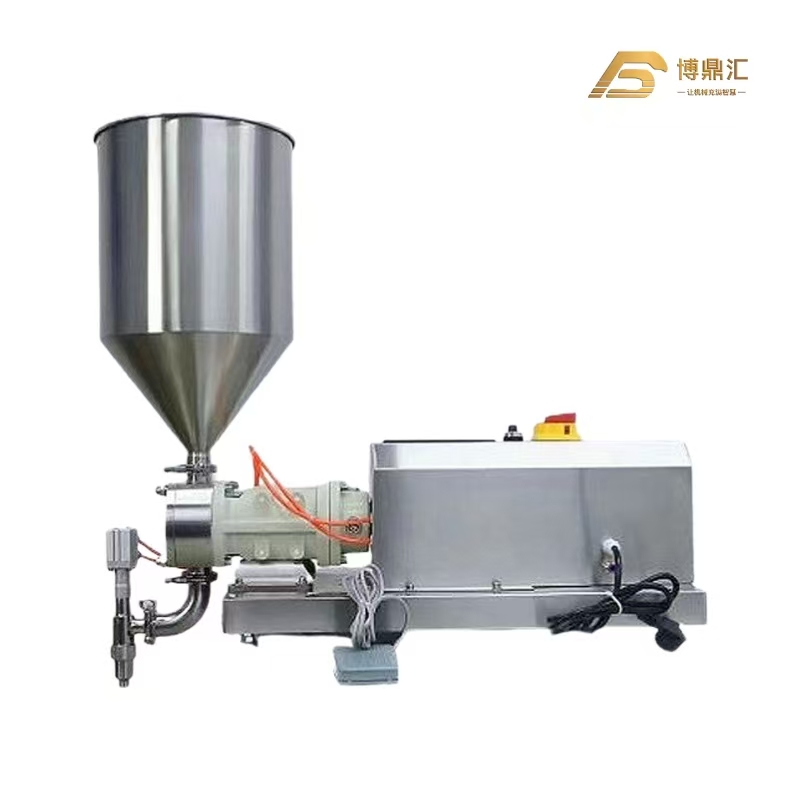
Unlike time-based setups, piston machines utilize a strict volumetric filling principle. They function similarly to a medical syringe. The core mechanism consists of a mechanical piston operating inside a precision-machined cylinder alongside a rotary or check valve.
During the intake stroke, the valve opens to the product hopper. As the piston retracts, it creates a powerful vacuum. This draws a highly specific volume of thick liquid into the cylinder. Subsequently, the valve switches alignment toward the dispensing nozzle. The piston then drives forward with pneumatic or servo-driven force. This pushes the exact volume of product out of the cylinder and directly into the waiting container.
The primary debate between these architectures comes down to passive flow versus active displacement. While a gravity setup waits for the liquid to fall, a piston filler actively drags the product into a chamber and forcefully expels it. The internal volume of the cylinder is fixed and strictly measurable. Consequently, piston architectures offer unmatched volumetric accuracy. Regardless of minor temperature shifts, the system will always dispense the exact same physical volume of product.
Piston systems serve as the undisputed backbone of the food and industrial packaging sectors. They effortlessly handle heavy tomato pastes, chunky salsas, and dense industrial greases. Modern equipment often integrates advanced servo motors for precise stroke control. This is particularly vital when handling thick sauces or peanut butter, ensuring zero product degradation.
In addition, these machines are highly valued in the personal care sector. Thick body lotions, heavy night creams, and exfoliating scrubs require precise volumetric control. Plant managers looking to upgrade premium skincare lines often integrate a specialized cosmetics packaging machine equipped with piston technology. This ensures aesthetic, air-free fills that meet strict retail standards.
Many modern contract packaging facilities process both thin solvents and thick gels on the exact same production line. In these dynamic environments, neither gravity nor piston architectures may offer the necessary flexibility. This is where pump-driven hardware excels.
Instead of relying on a single bulk tank or a reciprocating cylinder, a pump filling machine utilizes an individual, dedicated pump for each filling nozzle. The volume dispensed is controlled by the number of pump rotations or a specific time interval. Depending on the product profile, engineers utilize different pump heads.
Gear pumps feature interlocking metallic or composite gears. They are ideal for general-purpose liquids and medium viscosities. They provide a smooth, continuous flow but are not suitable for large, fragile particulates. Lobe pumps are engineered with larger internal cavities. They are excellent for thick liquids and products containing large solids without crushing them. Peristaltic pumps utilize rollers to squeeze a flexible tube. The liquid never touches the mechanical components of the pump. This sanitary design remains the gold standard for sterile pharmaceutical applications.
Pump systems offer a unique set of operational parameters that engineering teams must weigh carefully. They provide unparalleled versatility. A single machine can often handle everything from lightweight essential oils to heavy hair gels. They also offer infinite volume flexibility. Operators can easily switch between filling a small travel bottle and a large industrial jug simply by adjusting the pump rotation settings on the control panel.
Conversely, because every nozzle requires its own independent pump and motor, the initial capital expenditure is notably higher. Furthermore, tearing down and cleaning internal components between sticky product runs can be labor-intensive.
To assist in your capital equipment purchasing decision, the following matrix compares the three systems across critical operational parameters.
Operational Metric | Gravity System | Piston System | Pump System |
|---|---|---|---|
Primary Viscosity Range | Low: 1 to 1,000 centipoise | High: 10,000 to over 100,000 centipoise | Low to High: 1 to 50,000 centipoise |
Filling Principle | Time-based with passive flow | Volumetric with active displacement | Pulse or Time with active pumping |
Particulate Handling | Poor and not recommended | Excellent for handling large chunks | Good but highly dependent on pump type |
Volumetric Accuracy | Good but sensitive to tank pressure | Exceptional and highly precise | Very Good with consistent rotations |
Cleaning & Maintenance | Fast and straightforward | Moderate due to cylinder breakdown requirements | Moderate to Slow depending on pump complexity |
Selecting the correct architecture requires looking beyond the liquid itself. Plant engineers must consider industry-specific compliance, presentation standards, and broader market shifts.
Recent market analyses reveal a massive shift toward smart automation, sustainability, and operational flexibility. With the rapid rise of product variation, contract packagers are moving away from dedicated, single-product lines. Instead, there is a surging demand for adaptable machinery capable of handling diverse viscosities on the same day.
Simultaneously, strict regulatory compliance across the food and pharmaceutical sectors is pushing manufacturers to adopt sanitary Clean-in-Place designs across all filler types. This minimizes cross-contamination risks and reduces manual labor during changeovers. The industry is also seeing a heavy integration of smart sensors within pump and piston systems. These sensors monitor flow resistance in real-time, allowing the machine to automatically adjust motor torque to prevent cavitation when liquid temperatures fluctuate.
The food sector is strictly regulated, making sanitary design non-negotiable. For a facility bottling apple juice, a gravity setup with sanitary fittings provides a fast, hygienic solution. In contrast, a facility packaging chunky mayonnaise must utilize a sanitary rotary lobe or piston system to ensure exact portioning without degrading food quality.
Cosmetic packaging demands absolute aesthetic perfection. Bubbles, uneven fill lines, or product splashing are unacceptable on retail shelves. Thick waxes and heavy lotions require mechanical displacement to push the dense material without introducing air pockets. Facilities looking to scale often utilize bottom-up filling technology. The nozzle lowers into the bottle and rises as the product fills, completely eliminating trapped air in premium cosmetic gels.
Investing in industrial packaging machinery is a multi-year commitment. Making the right choice requires a strategic assessment of your current operations and future business trajectory.
First, examine your five-year growth plan. Are you currently packaging thin liquids but planning to introduce heavy gels next year? If future product lines involve drastically different viscosities, investing in a versatile pump filler now will prevent the need to buy a secondary machine later. Alternatively, if your product line is fixed, a high-speed gravity setup will provide the fastest return on investment.
Most importantly, never purchase packaging equipment based on theoretical specifications alone. Viscosity changes under shear stress and temperature variations. The most critical step in the purchasing process is requesting a Factory Acceptance Test. Send actual product samples and your exact containers to the machinery manufacturer. Allowing the engineering team to run your specific liquid through their hardware ensures the final machine delivered to your floor will perform flawlessly.
Ultimately, choosing the right equipment boils down to the unique physical properties of your product. Gravity setups remain the most cost-effective and efficient solution for thin, free-flowing, water-like liquids. Piston machines stand as the industry standard for highly viscous pastes, heavy gels, and products suspended with chunks. Meanwhile, pump systems offer unparalleled versatility for dynamic production lines handling a wide spectrum of liquid profiles.
By objectively evaluating the viscosity, particulate content, and future production goals of your facility, you can invest in a system that eliminates waste, accelerates throughput, and drives long-term profitability. If you are ready to upgrade your production line, explore the advanced engineering solutions at Bodinghui to find the exact machinery matched to your fluid dynamics.
The core difference lies in the driving force. Gravity systems rely on time and the natural downward flow of thin liquids from an overhead tank. Piston systems use active mechanical force to draw a precise volume of thick liquid into a cylinder and forcefully push it into a container. This makes them essential for liquids that resist flow.
Yes, but it requires the right mechanical architecture. A pump-driven system is usually the best choice for handling a wide variance in viscosity on a single line. While a piston machine can technically handle thin liquids, it is often considered mechanical overkill and may not be as fast as a gravity system for watery products.
Foaming liquids require gentle handling to prevent aeration. Gravity systems or peristaltic pump systems are often preferred because they minimize fluid agitation. Additionally, equipping the machine with bottom-up diving nozzles is critical. The nozzle descends to the bottom of the bottle and rises with the liquid level, effectively controlling foam.
Generally, yes. Because a pump filler requires an individual, dedicated pump and motor for every single fill head on the machine, the initial capital expenditure is higher. This is compared to a simple gravity tank system, which relies on basic pneumatic valves and atmospheric pressure.
Maintenance schedules vary heavily by architecture. Gravity fillers require minimal maintenance, usually limited to periodic valve seal replacements. Piston fillers require regular lubrication and seal inspections on the pneumatic cylinders. Pump fillers, particularly gear pumps, require frequent breakdown and cleaning if processing sticky or abrasive liquids to prevent premature gear wear.
Temperature directly impacts the dynamic viscosity of a liquid. As a product cools, it becomes thicker and more resistant to flow. If a gravity or pump system is calibrated for a warm liquid, a drop in temperature will slow the flow rate, resulting in under-filled bottles. Piston fillers remain the most resilient to temperature changes because they rely on fixed volumetric displacement rather than flow rate.