close
Choose Your Site
Global
Social Media
Views: 0 Author: Site Editor Publish Time: 2026-11-04 Origin: Site
In cosmetic manufacturing, machine downtime during packaging changeovers acts as a direct threat to production margins and Overall Equipment Effectiveness (OEE). Every idle minute chips away at daily output potential. Brand demands continue expanding toward higher SKU diversity. You will often see facilities shifting constantly from 15ml eye creams to 200ml body lotions within a single shift. Operations teams must frequently adjust packaging lines to meet these varied retail requirements.
Minimizing downtime without compromising seal integrity requires a strategic approach to mechanical adjustments. You also need precise volume calibration. Furthermore, evaluating equipment for rapid-changeover capabilities serves as a crucial defensive strategy. Modern facilities cannot rely on outdated wrench-and-bolt methods. True operational agility demands standardized procedures, digital recipe management, and robust change-part engineering.
Standardizing tooling (like tube pucks and dosing nozzles) significantly reduces downtime during SKU transitions.
Cosmetic tube diameter adjustments require physical changeovers at the feeding, holding, and sealing stations.
Filling volume adjustments demand precise dosing pump recalibration and careful management of product viscosity.
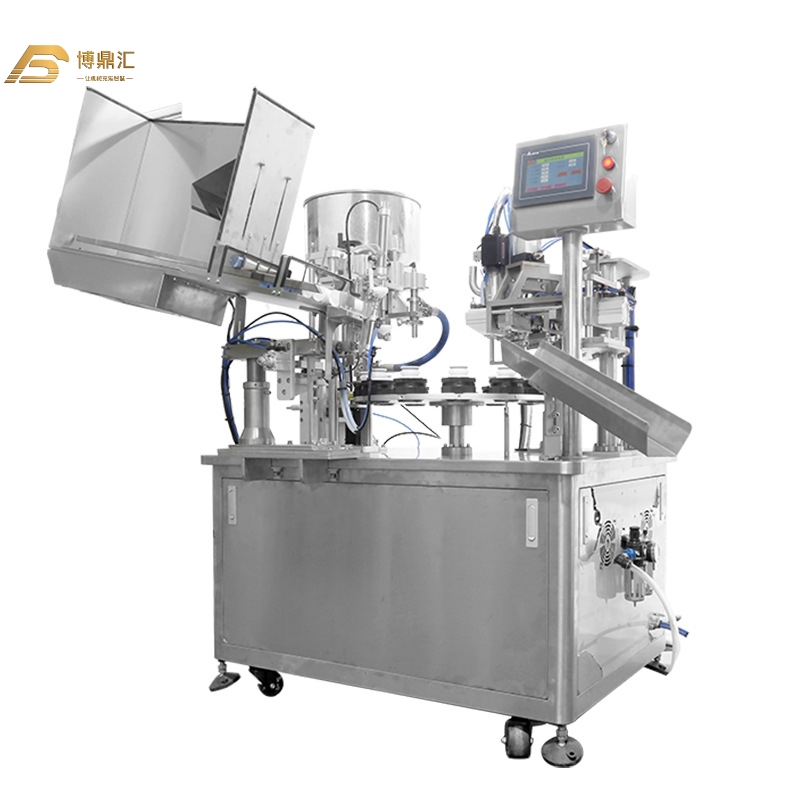
Upgrading to a modern tube filling and sealing machine with servo-driven adjustments and HMI recipe management removes human error and accelerates transitions.
An inefficient changeover process aggressively cannibalizes available production hours. It reduces OEE drastically. It also increases your overall cost-per-unit. A production line sitting idle generates zero revenue. Meanwhile, operator wages, facility utilities, and administrative overhead still accumulate. Cumbersome mechanical swaps often require extensive trial and error. This leads to wasted bulk product and scrapped packaging. Lost hours add up over weeks and months. Such inefficiencies ultimately delay product launches and frustrate valuable retail partners.
Cosmetic lines face exceptionally high changeover frequencies compared to other sectors. Consider a dedicated hand cream tube filling line. It must accommodate seasonal promotions, travel sizes, and diverse retail variations. Brands frequently update artwork. They launch limited-edition packaging. They introduce varying volume sizes for different markets. Facilities must pivot daily. High-mix, low-volume production is the new standard. Contract manufacturers especially feel this pressure. They juggle dozens of brand requirements in a single week.
Defining a successful changeover sets a baseline for continuous improvement. What does a good changeover look like? We define success through strict, measurable parameters.
Completing a full diameter and volume transition in under 30-45 minutes.
Achieving first-pass yield success immediately upon startup.
Experiencing zero seal failures during the initial post-changeover batch.
Executing the transition without requiring specialized mechanical tools.
Operators face immediate challenges at the feeding station. You must adjust the tube magazine and loading chutes to accommodate wider or narrower tube bases. Wider tubes require expanded track dimensions. Narrower tubes will twist or fall if chutes remain too wide. Gravity-fed systems demand precise angle calibrations. Automated pick-and-place arms require new suction cup positions. Misalignment here causes immediate jams. A jammed loader stops the entire upstream process. You should document track width settings for every specific SKU.
Tubes travel through the machine housed inside specialized holders called pucks. A robust cosmetic tube diameter adjustment involves swapping or modifying these internal pucks. They hold the tubes securely during rotation and filling. If a puck fits too loosely, the tube spins out of control. If it fits too tightly, the ejection mechanism fails. We recommend utilizing quick-release puck designs. These allow operators to snap new sizes into place quickly. Universal, adjustable pucks exist, but they sometimes lack the rigidity required for high-speed runs.
Different tube widths drastically alter the focal point of photoelectric sensors. You must realign eye-mark sensors to ensure proper artwork orientation. The machine spins the tube until the sensor detects a printed contrast mark. A wider tube changes the surface curvature. This change forces operators to adjust the sensor distance and angle. Improper calibration causes crooked crimps. Crooked artwork immediately ruins the product presentation on retail shelves. Always perform a manual slow-rotation test to verify sensor accuracy before initiating full speed.
The sealing station demands the most critical attention. You must carefully adjust heat jaws, ultrasonic horns, or folding stations based on the new tube diameter. Material type plays a huge role here. Plastic, laminate, and aluminum tubes behave differently. Wide tubes require even pressure across a longer horizontal jaw surface. Thin tubes need concentrated, rapid heat. Proper alignment prevents microscopic leaks. Uneven pressure causes one side of the seal to burst under pressure. We strongly suggest utilizing thermal imaging or pressure-sensitive paper to confirm jaw alignment.
Changing the fill volume requires direct mechanical or digital adjustments. Operators modify the piston stroke for higher or lower volumes. Precision remains non-negotiable. Pushing too much volume bursts the tube seal during the crimping phase. Delivering too little volume triggers regulatory fines and consumer complaints. Modern dosing pumps utilize servo motors. These allow for digital stroke adjustments via the touchscreen. Legacy systems rely on manual hand-cranks. You must calibrate the stroke length precisely. Always verify the output with a calibrated digital scale before connecting the hopper.
Switching volumes almost always requires changing dosing nozzles. You must prevent dripping, stringing, or air pockets. High-viscosity products like thick hand creams behave differently than thin serums. Thick creams require wider nozzles. Thin serums need restrictive nozzles with shut-off valves to stop dripping.
Identify the specific gravity and viscosity of the new bulk product.
Select a nozzle diameter that matches the tube opening.
Install positive shut-off or blow-off nozzles for stringy gels.
Adjust the filling speed to prevent aeration or foaming.
Test the nozzle plunge depth to ensure bottom-up filling.
Bottom-up filling prevents trapped air. Trapped air expands during sealing and destroys the crimp integrity.
Changing volumes often coincides with changing the bulk product. Sanitation requirements become paramount. You must emphasize the absolute prevention of cross-contamination. Thorough purging clears out the previous batch. Dedicated Clean-in-Place (CIP) systems flush the hopper, pumps, and nozzles with hot water and sanitizing agents. Thick cosmetics cling to internal pump walls. Swapping from a tinted foundation to a clear gel requires aggressive cleaning. We recommend establishing strict visual inspection protocols post-CIP. Swab testing confirms the absence of residual active ingredients or microbes.
Modern buyers should strictly mandate tool-less release mechanisms. Look for quick-release pins and hand-turn knobs. Reject traditional bolt-and-wrench setups. Wrench-based adjustments invite stripped threads and lost tools. They also require highly skilled mechanics. Tool-less designs empower everyday operators to perform physical swaps. This decentralizes line maintenance and accelerates the entire transition process. When evaluating a new Tube Filling and Sealing Machine, inspect the physical touchpoints. Brightly colored levers generally indicate engineered tool-less adjustment zones.
Legacy mechanical cam systems require extensive physical manipulation. Changing stroke length or lift height means adjusting heavy metal cams. This takes time and physical effort. Servo-driven machines automate stroke and height adjustments. A servo motor offers infinite variability within its range. It executes precise, repeatable motions dictated by software. Servos reduce physical wear and tear. They drastically lower the time required to switch from a 15ml fill to a 100ml fill.
Digital memory provides an incredible operational advantage. Human Machine Interface (HMI) recipe management systems store hundreds of product parameters. Operators simply select a saved SKU recipe on the touchscreen. The system automatically adjusts fill volumes, sealing temperatures, and cooling times. It removes human error. It prevents operators from guessing the correct heat setting for a specific laminate tube. A centralized recipe database ensures that a tube run on Tuesday matches the quality of a tube run on Friday.
Feature Category | Legacy Mechanical Systems | Modern Servo-Driven Systems |
|---|---|---|
Adjustment Method | Wrenches, bolts, and manual hand-cranks | Touchscreen HMI inputs and tool-less pins |
Parameter Recall | Paper logbooks and operator memory | Digital recipe database stored in memory |
Volume Calibration | Physical adjustment of piston stroke length | Automated servo-motor stroke adjustments |
Average Time Required | 90 to 120 minutes | 30 to 45 minutes |
Advise your procurement team to demand highly specific vendor demonstrations. Do not settle for standard sales pitches. Request demonstrations specifically focused on the teardown and setup time. Bring your two most disparate tube sizes to the test floor. Ask the vendor to switch the machine from your smallest diameter to your largest. Track the exact minutes required. Measure the first-pass yield of the first ten tubes produced after the swap. If a vendor hesitates to perform a live changeover test, you should reconsider the purchase.
Operators frequently encounter poor seal quality or inaccurate fill weights during the startup phase. The first 100 tubes following a tube filling machine changeover carry severe risks. Jaws might not reach thermal equilibrium immediately. Product viscosity might fluctuate as it settles in the hopper. You must address these common risks proactively. Implement a mandatory quarantine for the first production box. Perform destructive burst testing on random samples from this batch. Verify weights rigorously. Only release the line for continuous running after QA signs off on these initial samples.
You cannot achieve rapid changeovers without documented Standard Operating Procedures (SOPs). Emphasize the need for clear, visual alignment guides. Color-coded change parts eliminate guesswork. Engraved rulers on the machine frame allow operators to dial in exact distances without tape measures. Include photographs in your SOP binders. Show exactly what a correctly aligned sensor looks like. Show the correct orientation for the holding pucks. Laminated checklists placed directly at the machine station keep operators accountable for every step.
Many facilities suffer from a reliance on "tribal knowledge." This occurs when a single senior mechanic holds all the machine secrets. If that mechanic calls in sick, changeovers stall entirely. You must recommend shifting away from this dangerous practice. Move toward standardized, repeatable steps. Any trained operator should execute a full transition smoothly. Implement cross-training programs. Rotate operators through the teardown process weekly. Build a culture where following the documented standard is prized above personal shortcuts.
Predictable, rapid changeovers serve as major competitive advantages. They elevate your facility above those struggling with daily downtime. High-mix brand production requires agile machinery and well-trained operators. Minimizing transition times directly boosts your profitability and output capacity.
We advise facilities to aggressively audit their current changeover bottlenecks. Identify whether your delays stem from mechanical adjustments or volume-related calibration. Address these procedural flaws before investing heavily in new capital equipment. Sometimes, simple tooling standardization yields massive time savings.
Encourage your operations team to map out expected minimum and maximum tube dimensions accurately. Document product viscosities thoroughly. This diligence ensures accurate machine specification during the procurement phase. A strategic approach to packaging agility protects your margins and keeps your production flowing seamlessly.
A: Varies by machine age, but modern equipment should enable full diameter and volume changes in 30 to 45 minutes.
A: The holding pucks may remain the same, but the sealing station jaws and temperature profiles will require adjustment based on material thickness and thermal properties.
A: Improper alignment of the heating/sealing jaws relative to the new tube width, or failure to recalibrate the sealing temperature for the specific batch material.