close
Choose Your Site
Global
Social Media
Views: 0 Author: Site Editor Publish Time: 2026-10-13 Origin: Site
Walk onto any powder production floor. See that fine mist of whey protein, flour, or chemical additive coating the machinery? That airborne dust is not just a housekeeping issue. It is a relentless operational liability. It ruins packaging seals. It accelerates equipment wear. Quietly, it drains profit margins every single day.
Fine powders inherently cause two massive headaches: seal contamination and product loss. When a single cloud of dust infiltrates the sealing zone of a flexible pouch, microscopic channels form. These channels lead to weak seals, premature spoilage, and catastrophic shipping disasters. Meanwhile, the powder escaping into the ambient air represents raw material you paid for but can never sell.
Mastering the packaging of volatile, airborne particulates requires more than a standard bagging setup. It demands a holistic approach. You need precise environmental control, specialized dosing equipment, and advanced sealing technology. In this comprehensive guide, we walk you through actionable techniques from a frontline engineering perspective. Learn how to eliminate airborne particulates, troubleshoot weak seals, and safeguard your bottom line.
Seal integrity is paramount: Airborne dust settling in the seal zone is the primary cause of weak seals. Specialized dust extraction and ultrasonic sealing prevent this structural failure.
The right equipment matters: An enclosed dosing system paired with a vertical bagging machine is the industry standard for precise, clean powder handling.
Environmental control is non-negotiable: Managing facility humidity, static electricity, and bulk bag discharging prevents particulates from becoming airborne in the first place.
Product loss equals profit loss: Upgrading to modern, precision-engineered equipment pays for itself by eliminating product giveaway and drastically reducing shipping rejections.
Decision-makers often underestimate the compound effect of airborne particulates on their overall operational expenditure. Relying on manual workarounds, such as operators constantly wiping down sealing jaws, merely masks a systemic mechanical failure.
Product giveaway occurs when a machine overfills a package to compensate for weight variations, or when airborne dust escapes the packaging zone entirely. Losing one or two grams of powder per pouch may seem statistically insignificant on a single-bag basis. However, the financial drain at scale is substantial. That fine dust sucked into ambient HVAC systems is pure profit blowing away.
Production Volume Bags per Day | Daily Loss kg | Monthly Loss 20 Days | Annual Loss kg | Estimated Annual Cost Loss at $5 per kg |
|---|---|---|---|---|
10,000 | 20 kg | 400 kg | 4,800 kg | $24,000 |
25,000 | 50 kg | 1,000 kg | 12,000 kg | $60,000 |
50,000 | 100 kg | 2,000 kg | 24,000 kg | $120,000 |
Note: Calculations are baseline estimates. High-value pharmaceutical or chemical compounds yield significantly higher financial losses.
When airborne powder settles into the inner layers of a flexible pouch exactly where the sealing jaws meet, it acts as a physical barrier. This barrier prevents the polymer layers from melting together uniformly. The result is a frustrating phenomenon known in the industry as channel leakers. Compromised seals lead to rapid oxygen ingress, accelerating product oxidation and drastically reducing shelf life. Furthermore, these weak seals inevitably fail under the stress of transit.
Beyond material waste, poor packaging protocols introduce severe safety and maintenance risks. Fine granular products can be highly abrasive. When dust infiltrates the mechanical housing of standard machines, it acts like sandpaper. It grinds down bearings, fouls pneumatic cylinders, and coats delicate optical sensors. This leads to premature equipment failure and costly, unplanned downtime. High concentrations of airborne organic or chemical dust also pose respiratory hazards to operators and easily create combustible dust environments.
The manufacturing landscape is undergoing a massive shift regarding particulate management. Driven by stricter workplace safety regulations and surging raw material costs, facilities are rapidly phasing out open-air, gravity-fed filling systems. The modern standard demands zero-emission packaging environments.
Recent market data highlights a surge in the adoption of fully enclosed, automated dosing systems equipped with integrated HEPA filtration and localized vacuum extraction. Manufacturers realize that relying on ambient room filtration is no longer sufficient or compliant. Instead, the focus has shifted to source containment—trapping the dust exactly where it is generated. This transition is not just about compliance; it is a calculated move to achieve near-zero product giveaway and protect profit margins in an increasingly competitive global market.
To engineer a permanent solution, facility managers must first understand the underlying physics. Why do fine powders behave erratically during the bagging process?
Air displacement is the root cause of powder packaging failures. When a heavy slug of powder is dropped into a pre-formed pouch, it rapidly displaces an equal volume of air. Because the pouch is closed at the bottom, this displaced air has only one escape route: straight up. As the air rushes out of the bag, it carries the lightest, finest particles with it. This creates a turbulent cloud that coats the inner walls of the film right in the critical seal zone.
Triboelectric charging, commonly known as static electricity, is generated through simple friction. As dry material flows through stainless steel hoppers, down filling tubes, and past the plastic packaging film, it accumulates a static charge. Flexible packaging films are typically insulators and also carry static charges. This electrical imbalance causes fine particles to actively cling to the inner walls of the film like magnets, rather than dropping cleanly to the bottom of the pouch.
Powders are notoriously sensitive to environmental conditions. Many food and chemical additives are hygroscopic, meaning they readily absorb ambient moisture. If facility humidity is not tightly controlled, the material absorbs this moisture, becomes highly cohesive, and turns sticky. Sticky powders do not flow cleanly through the filling apparatus. Instead, they clump, bridge in the hopper, and leave a thick, stubborn residue on the film.
Overcoming the physics of air displacement and static requires highly specialized, positive-displacement equipment. Standard gravity fillers simply cannot handle volatile particulates.
An auger filler is widely recognized as the most effective dosing mechanism for non-free-flowing and dusty materials. It uses a precisely machined, vertically oriented screw housed within a tube. As the screw rotates, it drives an exact volumetric amount of product downward into the package. This mechanical control prevents the material from free-falling uncontrollably. The continuous agitation and controlled dispensing keep the powder compacted, significantly reducing the amount of air mixed into the product.
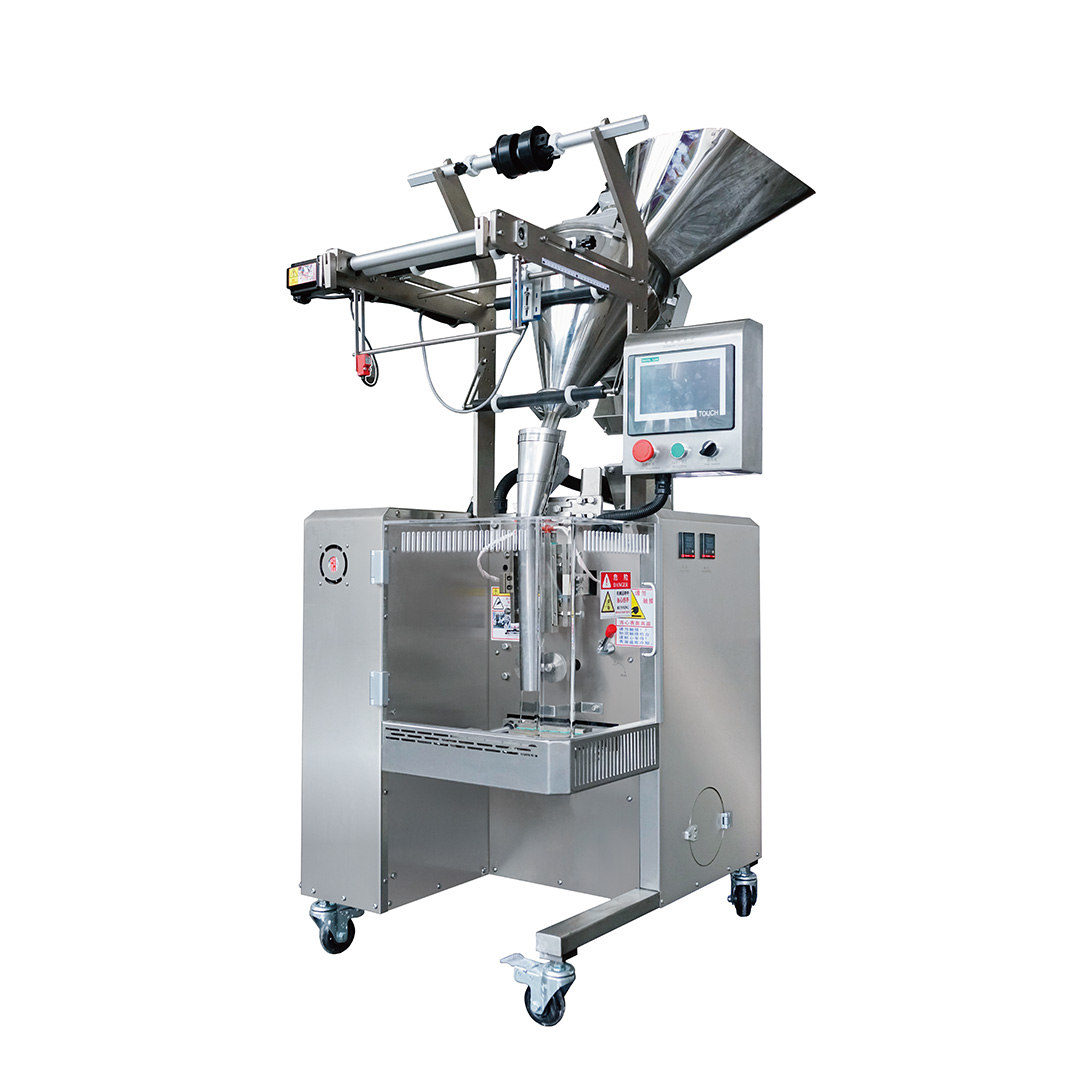
For high-speed, automated production, this dosing mechanism is typically integrated with a Vertical Form Fill Seal machine. This combination creates a unified, enclosed system. The system forms the bag from a flat roll of film, while the tooling doses the product directly into the formed tube. By enclosing the entire process, these machines isolate the volatile material from the ambient environment.
Highly regulated sectors require even more stringent protocols to prevent cross-contamination. When handling high-value or active ingredients, a specialized powder packaging machine is non-negotiable. Modern, precision-engineered units feature servo-driven auger motors delivering exceptional ±1% accuracy. Built with stainless steel 304 or 316L contact parts and boasting IP65 washdown capabilities, these machines meet strict cGMP compliance standards while maintaining speeds of 30 to 80 bags per minute depending on bulk density.
Even with the right base machinery in place, specific engineering techniques must be applied directly to the filling zone. Implementing targeted dust control packaging protocols is how you achieve a zero-leak rate.
The most direct method of managing airborne matter is localized exhaust ventilation. Dust hoods equipped with high-powered vacuum suction nozzles are strategically mounted directly above or adjacent to the filling zone. As the displaced air pushes particulates upward out of the pouch, the vacuum system safely extracts them before they have a chance to settle on the sealing area. In advanced closed-loop systems, this extracted material is routed to a centralized filtration system and reclaimed.
To minimize the velocity of displaced air, advanced machinery utilizes bottom-up filling, sometimes referred to as diving nozzles. Instead of dropping the product from the top of the bag, the filling nozzle physically descends into the pouch, stopping just millimeters above the bottom. As the powder is dispensed, the nozzle slowly rises in tandem with the fill level. This submerged technique keeps the drop distance to an absolute minimum.
To counteract triboelectric charging, static eliminators are seamlessly integrated into the film path. Ionizing bars generate a focused field of positive and negative ions. As the packaging film passes through this field, the static charge on the plastic is instantly neutralized. Without this static charge, the fine particles drop cleanly into the bottom of the pouch.
Achieving a hermetic seal is often the most challenging hurdle on the production line. When packaging extremely volatile materials, trace amounts of particulates may still reach the seal zone. Therefore, the sealing technology itself must be robust.
Traditional heat sealing relies on thermal conduction from the outside of the film inward. If a layer of powder is in the way, the heat cannot penetrate evenly. Ultrasonic sealing solves this dilemma scientifically by using high-frequency acoustic vibrations, typically 20 kHz to 40 kHz. These rapid vibrations create molecular friction within the inner film layers, generating heat from the inside out. The intense mechanical vibration simultaneously pushes contaminants out of the seal zone while melting the plastic.
Feature | Traditional Heat Sealing | Ultrasonic Sealing |
|---|---|---|
Heat Source | External heating elements via Conduction | Internal friction via high-frequency vibration |
Contaminant Tolerance | Very Low | High |
Energy Consumption | High | Low |
Seal Strength | Moderate | Excellent Hermetic Bond |
Best Application | Clean, free-flowing granular products | Fine, airborne, and sticky powders |
Mechanical interventions remain a staple to physically remove air and debris. Deflation sponges gently press against the body of the pouch just before the sealing jaws engage. This controlled squeezing expels excess trapped air slowly, preventing a sudden upward draft of particulates. By investing in a high-performance dusty powder filling machine, facilities can also leverage mechanical jaw wipers or targeted bursts of compressed air milliseconds before the heated jaws clamp down.
For facilities utilizing standard heat-sealing jaws, meticulous calibration is critical. Operators must find the exact equilibrium of temperature, pressure, and dwell time. A slightly higher pressure setting, combined with sealing jaws that feature a serrated or cross-hatched profile, can help bite through minor dust layers. However, this must be balanced carefully to avoid warping or cutting the delicate polymer film.
Effective containment begins the moment bulk material enters your facility. Poor upstream handling introduces unnecessary airborne dust, static, and moisture into the production environment long before the product reaches the bagging stage.
Transferring material from Flexible Intermediate Bulk Containers into the hopper is a high-risk operation. Untying a bulk bag in an open environment guarantees a massive release of particulate matter. Facilities should utilize bulk bag unloaders equipped with dust-tight connections, such as iris valves or inflatable spout seals. These mechanisms clamp securely around the neck of the bag, creating a closed system.
Maintaining a stable ambient environment is critical for material flowability. Storage and production areas should be equipped with industrial HVAC and dehumidification systems to maintain a Relative Humidity of typically 40% to 50%. Controlling the climate ensures that hygroscopic materials remain dry and free-flowing.
The true cost of poor containment is painfully discovered in the supply chain. Seal contamination does not just cause localized waste; it creates cascading downstream logistical failures.
When a weakly sealed bag of chemical additive or food powder is loaded onto a truck or cargo plane, it is subjected to constant vibration, stacking pressure, and atmospheric changes. Changes in altitude during transit cause the trapped air inside the pouch to expand. If the seal is compromised by trapped particulates, this pressure expansion will force the weak point to rupture completely.
The consequences are severe. A single burst bag can cover an entire pallet in fine dust. Distributors and retailers routinely reject entire shipments if they detect product leakage. The manufacturer is then forced to absorb the cost of the lost product, reverse logistics, and the unquantifiable damage to brand reputation. Investing in rigorous containment and sealing technology upfront is invariably more cost-effective.
Relying on manual interventions—such as operators sweeping the facility floor or slowing down production speeds to let dust settle—is a temporary band-aid for a systemic mechanical problem. These manual workarounds increase labor costs, throttle production output, and inevitably leave room for human error.
The only empirical way to eliminate seal contamination and product loss is to engineer the problem out of the process entirely. Upgrading to a purpose-built system equipped with positive-displacement tooling, static elimination, and vacuum extraction provides a highly measurable Return on Investment. The reduction in daily product giveaway and the elimination of rejected shipments often pay for the capital expenditure of the new machinery within the first few production cycles.
Packaging dusty powders requires a highly engineered approach. You must actively control static electricity, limit product drop distances, utilize vacuum extraction, and apply precision sealing technologies to overcome the volatile nature of fine particulates.
By eliminating product loss and guaranteeing hermetic seals, you directly boost your overall profitability and protect your brand's reliability in the market. Continuing to rely on outdated gravity fillers or manual cleaning processes will only result in further waste and operational frustration.
If you are ready to secure your packaging lines, eliminate giveaway, and protect your profit margins, it is time to upgrade. Visit Bodinghui Packaging to explore our specialized powder packaging solutions. Our team of engineers can help you configure the exact dosing mechanism, washdown specifications, and bagging system tailored to your specific product's bulk density and flow characteristics.
The most reliable solution is a Vertical Form Fill Seal machine fully integrated with an enclosed auger system. This setup provides exact volumetric dosing while maintaining a strictly enclosed environment. The enclosed design is absolutely necessary to prevent particulates from escaping into the facility atmosphere and settling on critical mechanical components.
This dosing system operates using a precisely machined, vertically oriented screw that rotates to dispense exact volumetric amounts of material. Because the tooling is highly accurate, it eliminates overfilling. Furthermore, the extended nozzle minimizes the free-fall distance of the powder into the bag, drastically reducing the generation of airborne dust.
Weak or leaking seals are predominantly caused by fine particles contaminating the seal zone during the filling process. When heat is applied, this trapped dust acts as an insulator, preventing the polymer layers of the packaging film from melting together properly. Implementing dust extraction vacuums, anti-static bars, or ultrasonic sealing technology resolves this issue.
Static electricity causes fine materials to behave erratically and cling to packaging films. This is controlled by maintaining optimal facility humidity around 40% to 50%, ensuring machinery is properly electrically grounded, and installing active static eliminating devices like ionizing bars directly on the film feed path.
Yes, standard machines can be retrofitted with aftermarket accessories like localized dust hoods, vacuum extraction tubes, and bottom-up filling tooling. However, for facilities handling highly volatile, expensive, or hazardous materials, retrofits may not be sufficient. Investing in a purpose-built, fully enclosed system is highly recommended to guarantee efficiency.
Seal integrity is typically verified using non-destructive methods like vacuum decay testing or bubble emission testing. In a bubble emission test, the sealed pouch is submerged in water inside a vacuum chamber. As a vacuum is drawn, any micro-leaks caused by powder contamination will emit a visible stream of bubbles, instantly identifying a compromised seal.
Hygroscopic powders require high-barrier flexible packaging films to prevent moisture ingress. Multi-layer laminated films incorporating an aluminum foil layer or a metalized PET layer offer the best Moisture Vapor Transmission Rate protection. Additionally, ensuring the inner sealant layer is compatible with ultrasonic sealing can further guarantee a hermetic closure despite dusty conditions.